

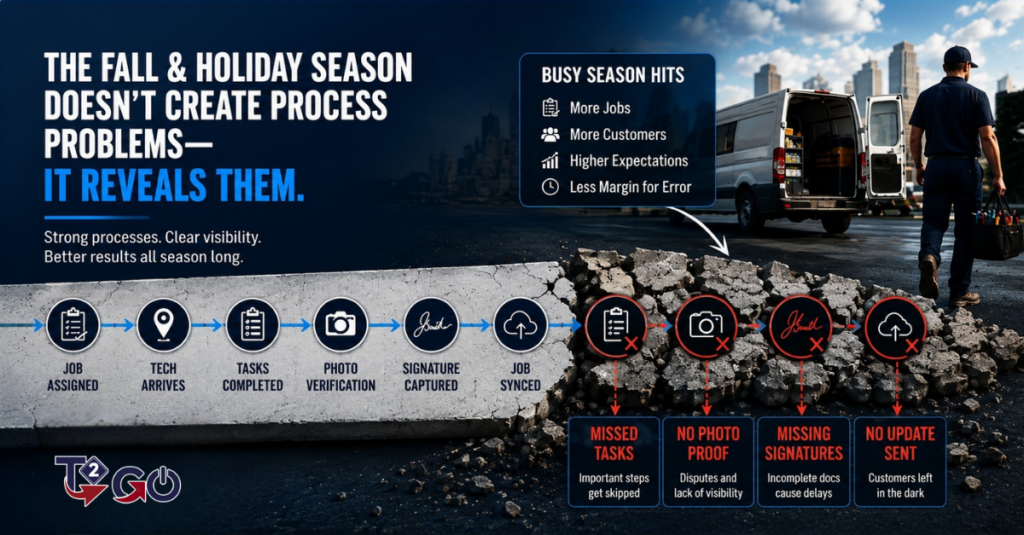
Q4 puts unusual pressure on pantry operations. Holiday parties and year-end meetings can increase demand at some accounts, while vacations and office closures reduce headcount at others. Thanksgiving and Christmas shorten the workweek, routes have to be rearranged, and drivers may be asked to cover locations they do not normally service. 4th Quarter fluctuations can reveal cracks in processes that otherwise get ignored.
A customer request gets passed along in a text but never makes it to the warehouse. A driver reports an out-of-stock item, but no one follows up. An account is serviced, but the office cannot confirm what was done until the route paperwork comes back. Managers spend the afternoon calling drivers for updates because they have no other way to see where things stand.
These problems were already part of the operation. During the slower spring and summer periods, experienced employees usually find a way to work around them. There is much less room for that during a compressed holiday schedule.
Review the Basics Before Q4
Preparing for Q4 does not require changing everything about the way your company operates. It does require an honest look at how information moves between the office, warehouse, drivers, service technicians, and customers.
Start with a few basic questions:
- If the regular driver is absent, can another driver service the account without calling the office for instructions?
- Are delivery hours, access information, customer contacts, and special account requirements current?
- Can managers see which stops have been completed and which ones still require attention?
- Are product shortages, substitutions, equipment problems, and customer requests recorded before the employee leaves the location?
- Are service photos and customer approvals being collected when they are required?
- When a driver reports a problem, is it clear who is responsible for the follow-up?
That last question is often overlooked. Recording a customer request does not accomplish much if the request simply sits in a service note. Someone needs to receive it, act on it, and close it out.
Give the Office Useful Information While the Route Is Running
Managers should not have to wait until the end of the day to learn that a delivery could not be completed or that a customer had a problem.
If the office receives that information while the driver is still in the area, there may be time to correct the issue. The driver might be able to return later, another employee may be nearby, or the office can at least contact the customer before the customer has to call looking for an explanation.
Useful visibility does not mean giving managers more reports to read. They need a straightforward view of what has been completed, what is still open, and what changed during the visit. Notes and photos should be attached to the account so the office can answer a customer’s question without trying to locate the driver.
Keep the Field Process Practical
Digital task flows can help employees follow the correct process at each account, but they have to fit the way route work is actually performed.
A pantry driver should not have to complete a long generic checklist at every stop. The task flow should contain the steps that matter for that account: confirm the service, record an exception, take the required photos, capture a signature when needed, and send any follow-up item to the right person.
The process also needs to account for differences between locations. One customer may require a signature. Another may want photographs of the completed pantry. Some buildings have strict delivery windows or security procedures. A driver covering the route needs to see those instructions without searching through old emails or calling someone who has serviced the account before.
Technology is useful when it makes the correct process easier to follow and gives the office information it can act on. If it adds unnecessary work for the driver, employees will rush through it or find ways around it.
Make the Changes Before the Holiday Schedule Begins
Review customer holiday schedules now. Confirm office closures, special events, expected changes in headcount, and requests for additional products. Look at the routes that become difficult when the service week is shortened and make sure coverage drivers have the information they need.
It is also worth reviewing the problems from last Q4. Look at emergency deliveries, missed stops, customer complaints, overtime, and last-minute product requests. Those records will usually show where the process needs attention.
If your operation still depends on paper notes, group texts, verbal updates, or information known only by the regular driver, Q4 is likely to make those weaknesses more expensive.
Tech2GO helps vending, OCS, micro market, and pantry operators put consistent field processes in place. Custom task flows give drivers and technicians clear instructions for each visit. Photos, notes, and digital signatures document the work from the location, while real-time dashboards allow managers to see completed, scheduled, and overdue work without tracking down employees for updates.
Contact Tech 2 Success to learn how Tech2GO can help your team prepare for Q4 and manage field operations more consistently throughout the year.