
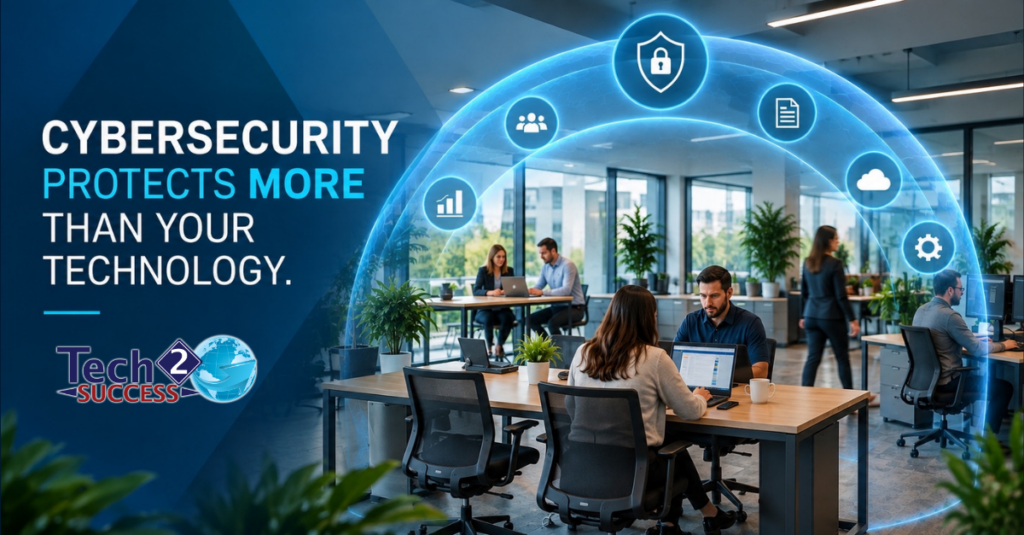
Cybersecurity often gets treated like something that belongs to the IT department.
Keep the software updated. Install a firewall. Block suspicious emails. Back up the data. Let the IT team worry about the rest.
But when a cybersecurity incident happens, the impact rarely stays in IT.
Employees may lose access to email or critical files. Orders and customer communications can be interrupted. Sensitive business information can be exposed. Teams can lose hours – or longer – trying to recover systems and get back to normal.
That makes cybersecurity more than a technology issue. It’s a business continuity issue.
One Click Can Become a Business Problem
Not every cyberattack starts with someone “hacking” their way through sophisticated security.
Sometimes, it starts with an ordinary-looking email.
An employee clicks a link. A familiar Microsoft sign-in page appears. They enter their credentials.
And suddenly, someone else may have access to their account.
Phishing and other social engineering attacks work because they target people, not just technology. Attackers may impersonate coworkers, vendors or familiar services and create a sense of urgency designed to make someone act before they stop to question what they’re seeing.
That’s why protecting a business requires more than putting security tools in place.
Employees need to know what to look for, too.
Your Employees Are Part of Your Cybersecurity Strategy
Security awareness training helps employees recognize suspicious behavior before it becomes a larger problem.
That might mean noticing an unusual sender address, questioning an unexpected attachment, recognizing a fake login page or knowing when to contact IT instead of clicking.
The goal isn’t to turn every employee into a cybersecurity expert.
It’s to make security part of everyday business behavior.
Technology can filter threats and identify suspicious activity, but employees are often the ones making the final decision about whether to click, download, respond or report.
Giving them the knowledge to make a better decision adds another layer of protection.
Cybersecurity Works Best in Layers
Of course, employee awareness is only one part of the picture.
Businesses also need technology working behind the scenes to reduce risk and limit the impact when something does go wrong.
Email security can help stop malicious messages before they reach an inbox. Firewalls can help protect networks from unauthorized access. Managed updates help address known vulnerabilities instead of leaving them exposed. Backup and recovery solutions provide another line of defense if business data becomes unavailable or compromised.
No single solution eliminates cybersecurity risk.
Together, however, these layers make it harder for one mistake or one threat to become a major business disruption.
And Then There’s Recovery
Preventing an incident is the goal.
But a cybersecurity strategy also needs to answer another question:
What happens if prevention fails?
That’s where backup and recovery become especially important.
A backup isn’t simply a copy of your data sitting somewhere else. It should be part of a recovery plan that considers what needs to be restored, how quickly the business needs it and how operations will continue while recovery is happening.
Because when important systems or data become unavailable, the question isn’t simply, “Do we have a backup?”
It’s “How quickly can we get the business moving again?”
Keep Security From Becoming an Afterthought
Cybersecurity Awareness Month is a useful reminder to review passwords, phishing awareness and security tools.
But cybersecurity can’t be something a business thinks about only once a year – or only after something goes wrong.
As businesses add employees, devices, applications and data, their security needs change too. Regular training, proactive IT management, layered security and a tested recovery strategy help keep those changes from creating unnecessary risk.
Because the goal of cybersecurity isn’t simply to protect technology. It’s to protect the business that depends on it.
Tech 2 Success helps businesses take a proactive approach to IT and cybersecurity, from managed IT support and security awareness training to email protection, firewalls, backup and recovery. Not sure where your business stands? Take our no-obligation Cybersecurity Self Assessment.
Ready to strengthen the technology behind your business? Contact Tech 2 Success to start the conversation.