
Most technology issues do not begin as major failures.
They often start with small interruptions:
- slow systems
- inconsistent performance
- weak security gaps
- backup uncertainty
- recurring support issues
Individually, these problems may seem manageable.
Over time, however, small inefficiencies can create larger operational challenges that impact productivity, reliability, and business continuity.
Smarter IT systems help reduce that friction before it affects day-to-day operations.
What Is Operational Friction?
Operational friction refers to small obstacles that slow teams down, interrupt workflows, or create unnecessary complexity. Technology-related friction often appears in ways businesses may not immediately recognize.
Examples include:
- employees waiting on slow systems
- email interruptions
- recurring password issues
- security concerns
- inconsistent backups
- reactive support requests
- unreliable infrastructure
Because these issues often happen gradually, businesses sometimes accept them as “normal.” They aren’t.
Small Technology Gaps Can Create Bigger Business Problems
Many organizations focus on fixing problems only after something breaks.
Reactive support may solve immediate issues, but it often does not address underlying causes.
Over time, businesses can experience:
Reduced Productivity
When systems slow down or employees encounter repeated technical issues, valuable time disappears. Even small interruptions repeated throughout the day can create significant productivity losses.
Increased Security Risk
Cybersecurity threats continue evolving.
Weak email security, outdated systems, and inconsistent protection measures can create opportunities for:
- phishing attacks
- compromised credentials
- ransomware events
- business email fraud
Businesses increasingly need multiple layers of protection rather than relying on a single security measure.
Backup Uncertainty
Many businesses assume backups are working correctly simply because they exist.
However, questions often remain:
- Are backups running properly?
- Is data protected?
- Can systems actually be restored?
Backup strategies are only valuable when they can support recovery when needed.
What Smarter IT Systems Look Like
Strong IT environments typically focus on prevention, visibility, and consistency rather than constant troubleshooting.
Examples of smarter infrastructure may include:
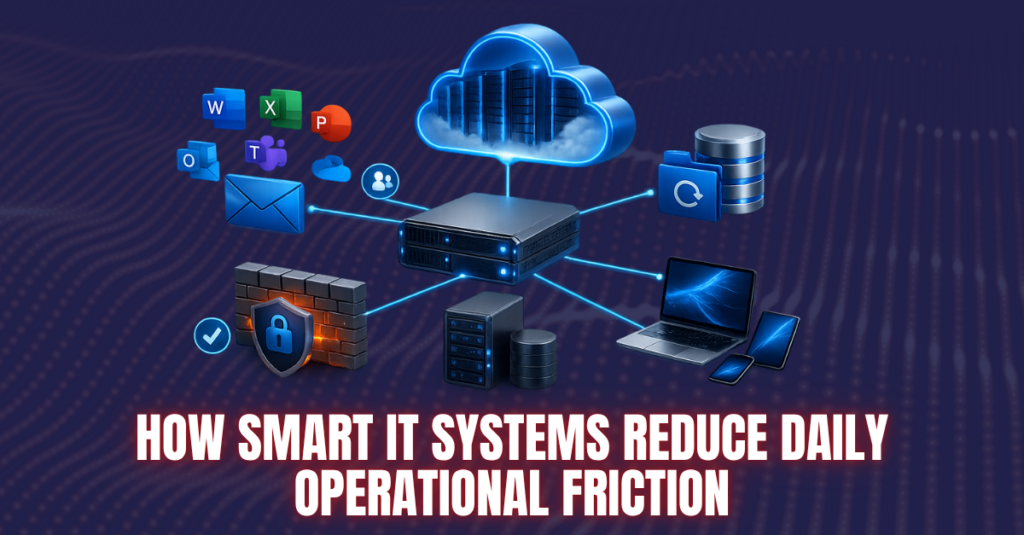
Private Cloud Infrastructure
Cloud environments can help improve accessibility, flexibility, and operational reliability while supporting business growth.
Microsoft 365 Management
Email, collaboration tools, and productivity platforms often become central to day-to-day operations. Managing them effectively helps reduce disruption.
Backup and Recovery Planning
Reliable backup systems help businesses prepare for unexpected events rather than reacting after damage occurs.
Layered Security Protection
Security increasingly relies on multiple protective layers.
This can include:
- firewalls
- email protection
- user security awareness
- threat monitoring
- endpoint security
Layered strategies help strengthen resilience.
Prevention Is Usually Less Expensive Than Disruption
Businesses often calculate the cost of technology upgrades. What frequently gets overlooked is the cost of interruptions.
Questions worth considering include:
- How much productivity is lost when systems fail?
- How much time is spent resolving repeated issues?
- What happens if critical systems become unavailable?
- What would downtime cost?
Technology should support operations – not create obstacles.
Smarter Operations Start With Stronger Systems
Technology should help teams work more efficiently, not create additional complexity.
Businesses that strengthen infrastructure before issues grow larger can often improve reliability, reduce risk, and support long-term growth.
Smarter systems do more than solve problems. They help businesses run better.
Frequently Asked Questions
What is operational friction in IT?
Operational friction refers to technology-related obstacles that reduce efficiency, interrupt workflows, or create unnecessary complexity within day-to-day business operations.
Why are backups important for businesses?
Backups help protect critical business data and support recovery after system failures, cyber incidents, or unexpected disruptions.
Why is layered cybersecurity important?
Layered cybersecurity uses multiple protective measures that work together to reduce vulnerabilities and strengthen overall protection.
How can businesses reduce IT downtime?
Businesses can reduce downtime by improving infrastructure, strengthening security, maintaining reliable backups, and addressing issues proactively rather than reactively.
Technology should help your business move forward – not create friction behind the scenes. Tech 2 Success helps businesses strengthen infrastructure with private cloud solutions, Microsoft 365 management, backups, security tools, and proactive IT support. Strengthen Your IT Environment