
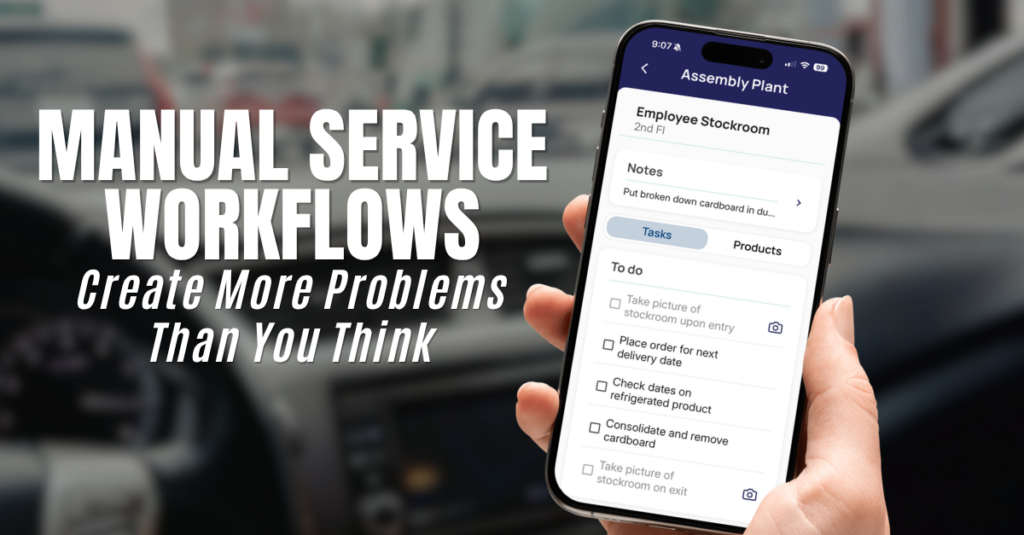
When service workflows are handled manually, the problems do not always show up right away.
At first, it may just feel like a few extra steps. A note gets written down here. A text gets sent there. Someone follows up later. A service update gets passed along manually. A technician remembers what happened on the last visit, or tries to.
But as service activity increases, those workarounds start creating bigger issues. Tasks become harder to track. Communication gets less consistent. Visibility drops. Customers get fewer clear updates. Teams spend more time piecing information together instead of moving work forward.
That is the real problem with manual service workflows. They do not just cost time. They create friction that can affect execution, accountability, customer confidence, and long-term efficiency.
Manual processes often feel manageable until they stop being manageable
Many businesses do not set out to create disconnected workflows. It usually happens gradually.
A process gets built around what works in the moment. A spreadsheet gets added. A paper checklist gets used in the field. Updates are shared by text, email, or phone call. Service notes live in different places. Over time, the process becomes dependent on people remembering details, communicating consistently, and filling in gaps manually.
That may be enough for a while. But once service activity grows, those same processes can start slowing the business down. The issue is not always a major breakdown. More often, it is the steady buildup of small inefficiencies that make service harder to manage than it should be.
The hidden friction shows up in everyday service work
When workflows are fragmented, teams often spend more time managing the process around the work than the work itself. That can look like:
- unclear service status
- missed or delayed updates
- inconsistent communication between office and field teams
- difficulty tracking recurring tasks
- limited visibility into what was completed, what still needs attention, or what changed from the last visit
- extra time spent looking for notes, confirming details, or following up manually
None of these issues may seem dramatic in isolation. But together, they create friction that makes service execution less efficient and less predictable. The more service activity your team is managing, the more those inefficiencies tend to multiply.
Pantry service becomes harder to manage without strong visibility
Pantry service depends on consistency.
To keep customer locations stocked and service running smoothly, teams need a clear view of what is needed, what was delivered, what needs follow-up, and how service activity is being tracked over time.
When that process is managed manually, it becomes easier for details to slip through the cracks. Inventory needs may be tracked inconsistently. Communication may vary from account to account. Internal teams may not have a full picture of what happened on-site. Customers may have limited visibility into what was done or what is coming next. That creates more than inconvenience. It can affect service quality and customer confidence.
T2GO helps bring more structure to pantry service workflows by giving operators a better way to manage service activity, track what is happening, and improve visibility across accounts. Instead of relying on disconnected updates, teams can work from a clearer, more organized system.
Preventative maintenance suffers when service tracking is inconsistent
Preventative maintenance is another area where manual workflows can create avoidable problems.
When recurring service schedules, completed tasks, equipment notes, and on-site updates are spread across multiple tools or handled informally, it becomes harder to maintain consistency from one visit to the next. That can lead to:
- missed or unclear maintenance activity
- incomplete service records
- less visibility into recurring needs
- weaker accountability across visits
- more difficulty identifying service opportunities in the field
As maintenance programs grow, those gaps become harder to manage.
T2GO helps operators bring preventative maintenance workflows into a more organized system, making it easier to track service activity, keep records more consistent, and maintain visibility into what has been completed and what still needs attention.
Better workflow tools improve more than internal efficiency
One of the biggest mistakes businesses make is assuming workflow tools only benefit the internal team. In reality, better service workflows also create a better customer experience.
When service activity is easier to track and communicate, customers get more visibility into what is happening. Expectations become clearer. Follow-up feels more organized. Confidence improves because the process feels more controlled and transparent. That matters.
A stronger workflow system helps operators deliver service in a way that feels more professional, more consistent, and easier to trust. That can support stronger relationships over time, especially in service models where visibility and communication are part of the value customers expect.
Visibility creates control
One of the biggest advantages of a stronger workflow system is visibility.
When service activity is centralized and easier to see, operators can manage with more confidence. Teams can check status more easily. Office staff and field teams can stay more aligned. Service history becomes easier to reference. Recurring work becomes easier to organize.
That kind of visibility helps reduce confusion and makes everyday service work easier to coordinate. It also helps reveal where opportunities exist to improve execution, strengthen communication, and create more consistency across accounts. That is what optimization should look like in service workflows – not adding complexity, but creating more clarity and control.
Smarter workflows can also support more opportunity in the field
Better service systems do not just help teams stay organized. They can also help operators create more value during service interactions.
For example, preventative maintenance workflows can make it easier to identify service needs and support selling parts or services on-site when appropriate. Pantry workflows can help improve consistency and make service delivery easier to manage across accounts.
T2GO is designed to help operators move beyond disconnected service activity by supporting:
- clearer workflow organization
- better visibility into service activity
- customer-facing portal access
- stronger accountability in the field
- on-site signature confirmation
- more organized coordination across pantry and preventative maintenance programs
These capabilities help operators create a service process that is not only easier to manage, but better aligned with customer expectations and long-term efficiency.
More service activity should not mean more chaos
That is often what manual workflows create over time: more moving parts, more guesswork, and more room for inconsistency. But service growth does not have to mean losing visibility.
With the right workflow tools in place, operators can keep service activity more organized, improve communication, strengthen accountability, and support a better customer experience across pantry service and preventative maintenance programs.
At Tech 2 Success, T2GO helps operators simplify service workflows with better tracking, stronger visibility, customer portal support, and tools built to improve execution in the field.
Looking for a better way to manage pantry service and preventative maintenance workflows? Explore T2GO from Tech 2 Success.